The question what are septic tank systems refers to private systems that collect, settle, and treat wastewater. A septic tank holds water while solids sink and lighter waste floats. Liquid then moves to a drainfield, where soil gives it more treatment. This process helps protect homes, land, and nearby water in Conyers.
Table of Contents
- What is a septic tank and what does it do?
- What are the main parts of a septic system?
- How does a septic tank separate and treat wastewater?
- How do the septic tank and drainfield work together?
- What septic terms should property owners know?
- What are the most common septic system misconceptions?
- How can you protect and maintain a septic system?
- Frequently Asked Questions
What is a septic tank and what does it do?
A septic tank is a buried, watertight container. It receives wastewater from a home or other building. The tank holds the water long enough for heavy solids to sink. Lighter waste rises to the top. The tank starts the treatment process, but it does not complete it alone. It is one part of a larger septic system.
The septic system’s basic purpose
A septic system treats wastewater where a public sewer line is not available. It can serve homes, some businesses, and other buildings with the right land and approved design. The system keeps waste contained and sends liquid into the soil for more treatment.
Wastewater comes from toilets, sinks, showers, tubs, washing machines, and dishwashers. It may contain waste, soap, food bits, grease, and other materials. A healthy system handles this flow without allowing untreated wastewater onto the ground.
Rules can differ by state, county, and property. Conyers owners should check local rules before adding rooms or changing plumbing. They should also check before building near a tank or drainfield. Septic Tank Service Conyers can help property owners understand when pumping, inspection, or a closer system review may be needed.
How wastewater enters and leaves the tank
The main sewer pipe carries wastewater from the building to the tank. An inlet pipe guides the flow inside. Once inside, the water slows down. Solids settle, and floating material rises.
The clearer liquid in the middle is called effluent. It leaves through an outlet pipe and moves toward the drainfield. Baffles help keep scum and sludge inside the tank. A baffle is a fitting that directs flow. If one is damaged or missing, solids may enter the drainfield and cause problems.
What are the main parts of a septic system?
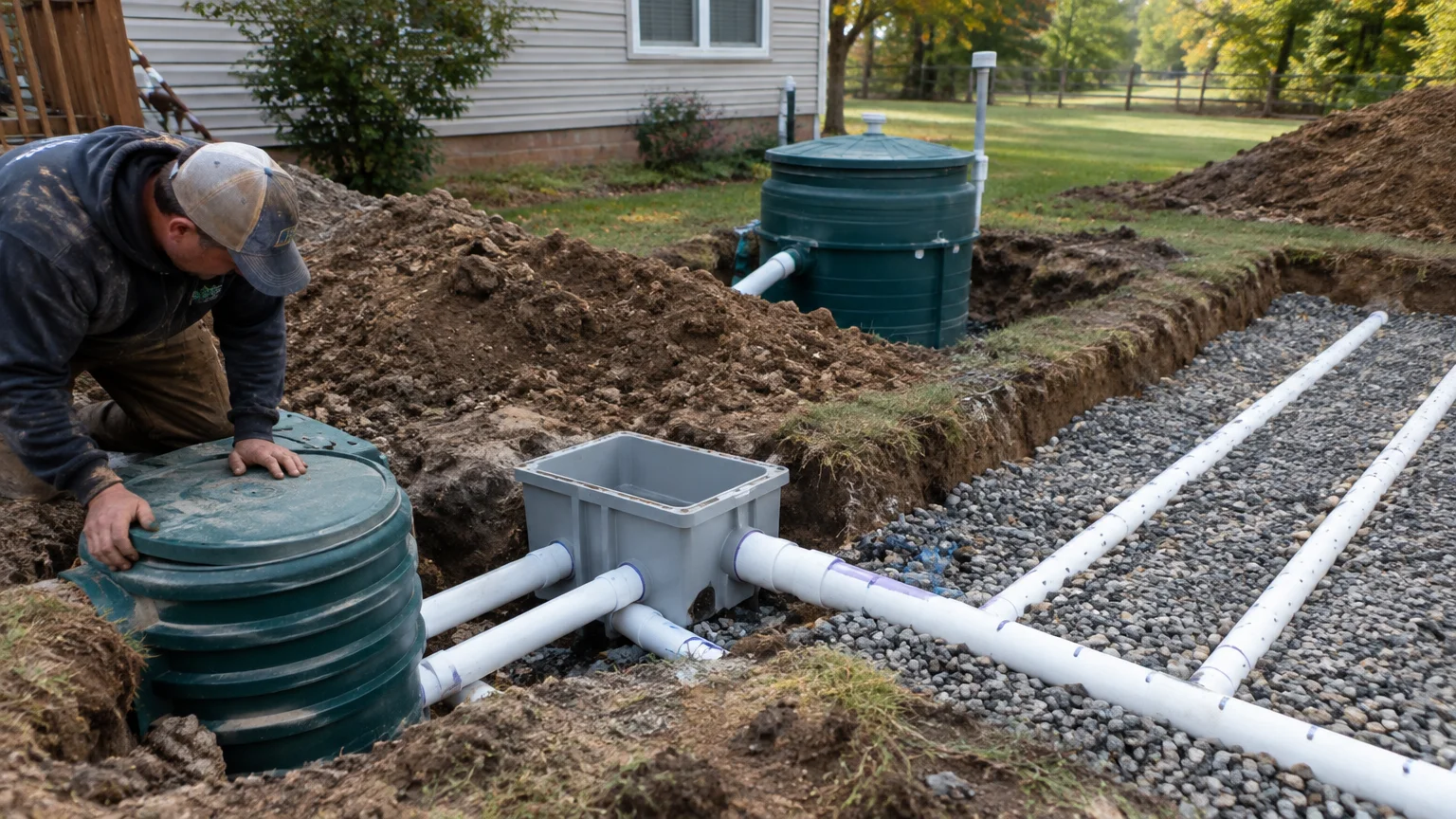
The main parts include the tank, pipes, access lids, inlet and outlet fittings, drainfield, and soil. Some systems also have a pump or distribution box. Each part has its own job. A problem in one part can affect the whole system.
Tank, inlet, outlet, and access lids
Tanks are often made from concrete, fiberglass, or approved plastic. Their size and design depend on the property, local rules, soil, and expected water use. The inlet pipe brings wastewater from the building. The outlet pipe sends liquid toward the drainfield.
Access lids let trained workers inspect the tank and remove built-up solids. Some tanks have more than one lid. A riser is a pipe that brings an access opening closer to the ground. Secure lids are important. Open or damaged lids can create a serious safety risk.
A distribution box may sit between the tank and drainfield. It spreads liquid among several drainfield lines. Some systems use a pump tank and pump. These parts move wastewater when the drainfield sits higher than the tank. They may also help control when liquid enters the field.
Drainfield, soil, and distribution components
The drainfield receives liquid from the septic tank. It may have trenches, chambers, or other approved structures. Liquid moves through small openings and enters the soil below and around the field.
Soil acts as a natural filter and treatment layer. It lets water move at a safe rate while holding back many harmful materials. Soil that is too tight, wet, shallow, or poorly suited may not treat wastewater well.
A percolation test, often called a perc test, checks how fast water moves through soil. A qualified soil professional, engineer, health department, or approved site evaluator may oversee the test. Local rules decide who can perform and approve it.
How does a septic tank separate and treat wastewater?
A septic tank separates wastewater into layers while the water rests. Heavy material forms sludge at the bottom. Grease and other light material form scum at the top. The middle layer is effluent. It flows toward the drainfield for more treatment.
The roles of scum, effluent, and sludge
Sludge is heavy solid material that settles on the tank floor. Scum is the floating layer near the top. Effluent is the liquid between these layers. These terms help workers explain what they find during inspection or septic pumping.
Baffles direct wastewater and help keep scum and sludge in the tank. Some newer tanks also have effluent filters. An effluent filter catches some solids before they reach the drainfield. It needs proper cleaning and does not replace regular tank care.
Solids build up because bacteria cannot break down everything that enters the tank. Pumping removes stored sludge and scum. The right septic pumping schedule depends on tank size, household size, water use, waste habits, and the amount of solids inside.
What happens during natural wastewater treatment
Bacteria inside the tank break down some organic waste. This lowers part of the waste load. However, the tank does not remove every germ, chemical, or nutrient. It is not a complete wastewater treatment plant.
After effluent leaves the tank, the soil provides another treatment step. Soil can filter water and support natural processes that reduce many pollutants. This only works when the drainfield is designed well and protected from damage.
Too much water can move through the system too fast. Grease, wipes, harsh chemicals, and other non-flushable items can also cause harm. Good daily habits help the tank and drainfield work as planned.
How do the septic tank and drainfield work together?
The septic tank and drainfield are one connected treatment system. The tank removes much of the solid waste first. The drainfield receives the liquid and lets the soil provide more treatment. Neither part can safely replace the other.
Wastewater flow from the home to the soil
For people asking “what are septic tank systems?”, wastewater leaves the home through the inlet pipe. Inside the tank, scum rises, sludge settles, and effluent stays between them. The effluent then moves through the outlet and distribution parts into the drainfield soil.
A simple flow path is home plumbing, inlet pipe, septic tank, outlet pipe, distribution box or pump, drainfield lines, and soil. Some systems have pumps, advanced treatment units, or unusual layouts. A licensed professional or local authority can confirm the layout of a specific property.
Owners should keep records of the tank location, drainfield location, pumping, inspections, repairs, and permits. These records help future owners, tenants, and service workers. They also help prevent digging or building in protected areas.
Why soil conditions affect system performance
Drainfield soil must accept liquid at a safe rate. If water moves too slowly, the field may stay wet. If water moves too quickly through some soils, treatment may be weaker. A high water table, flooding, compacted soil, or poor grading can also hurt system performance.
Heavy vehicles and structures can crush pipes or pack down the soil. Pools, sheds, driveways, and additions should stay away from the drainfield unless local officials approve the plan. Grass is often a good cover. It helps limit erosion without adding deep roots.
What septic terms should property owners know?
Basic septic terms make inspection reports and service talks easier to understand. These words describe system parts, wastewater layers, and common care tasks. Knowing them helps owners ask better questions and avoid confusion.
Effluent, biomat, baffle, and riser explained
Effluent is the liquid that leaves the septic tank for the drainfield. A biomat is a thin layer that forms where effluent enters the soil. It can help treatment. A thick or blocked biomat may slow the flow.
A baffle directs wastewater and helps keep scum and sludge inside the tank. A riser extends an access opening closer to the ground. These parts can make inspection and pumping easier. They must stay secure and protected.
A drainfield is the soil area that receives tank effluent. A distribution box spreads flow across drainfield lines. A pump tank stores and moves effluent when a system needs mechanical lifting or timed flow.
Pumping, inspection, maintenance, and repairs compared
Pumping removes sludge and scum from the tank. Inspection checks the tank, pipes, levels, baffles, filters, and signs around the drainfield. An inspection may be needed during a property sale, before a purchase, after a problem, or during routine care.
Maintenance includes safe water use, cleaning an effluent filter when needed, protecting the drainfield, and keeping records. Repairs fix a blocked, broken, damaged, or failing part. Septic tank replacement is a larger project. It may involve a new tank, drainfield, pump, or full system design.
The terms septic pumping and septic system pumping services often describe professional work that removes stored solids. The exact work should be confirmed before service starts. Septic Tank Service Conyers can explain which visit may fit a property in the main Conyers area. Service areas can include Downtown Conyers, Lithonia, Stockbridge, Milstead, Almon, and nearby communities.
What are the most common septic system misconceptions?
Many septic problems start with a wrong belief. A system may work quietly for years. Quiet operation does not prove that every part is healthy. Regular maintenance still matters.
Why a septic tank is not a complete wastewater treatment plant
A septic tank settles solids and supports early biological treatment. It does not remove every pollutant from wastewater. The drainfield and soil are needed to finish more of the treatment process.
Owners should not pour paint, fuel, strong chemicals, grease, or medicine down household drains. They should not flush wipes, paper towels, feminine products, cat litter, or other items that do not belong in a septic system.
Another mistake is treating the tank like a trash can. A septic tank is made for wastewater and normal toilet waste. Items that do not break down can fill the tank, block pipes, damage pumps, or reach the drainfield.
Why drains working normally does not prove the system is healthy
A system may have no indoor warning signs while solids keep building. The drainfield may also be under stress before sewage backs up or wet spots appear. Waiting for a major failure may cause more damage and disruption.
Owners should learn where the tank and drainfield are located. They should watch for slow drains, sewage odors, wet ground, bright grass over the field, surface wastewater, or sewage backup. One sign does not prove the cause. It does show that a professional review may help.
People also ask how deep a septic tank should be and how far it should sit from a house. The answer depends on the design, ground level, pipes, soil, access needs, and local rules. A site plan or qualified inspection is safer than guessing.
How can you protect and maintain a septic system?
Homeowners can handle many simple daily tasks themselves. They can fix small plumbing leaks, spread laundry across the week, and keep surface water away from the drainfield. They should not open a tank, enter a tank, or dig into the drainfield.
Septic tanks can contain toxic gases and unsafe conditions. Pumping, tank entry, major repairs, electrical work, and emergency pumping should be handled by trained professionals. A homeowner can safely note odors, wet areas, or leaks without opening the system.
Everyday habits that reduce strain on the system
Simple habits help reduce stress on the tank and drainfield. Fix leaking fixtures and use water across the week instead of all at once. Keep sinks and toilets for their intended use.
- Flush only human waste and toilet paper.
- Keep grease, oils, chemicals, and paint out of drains.
- Keep vehicles, sheds, and heavy equipment off the drainfield.
- Keep records of pumping, inspections, permits, and repairs.
- Learn the tank location before landscaping or digging.
A homeowner may check for clear plumbing leaks and keep the drainfield free from heavy traffic. A homeowner should not pump a tank, remove a heavy lid, enter a tank, or push a probe into the ground. Those actions can cause injury or damage pipes.
Signs that professional evaluation may be needed
Professional help may be needed when wastewater backs up or drains slow across the property. Outdoor odors, wet areas near the tank, or liquid near the drainfield also need attention. A pump alarm, sudden change after heavy rain, or sewage smell may call for prompt help.
Limit water use if sewage is backing up. Keep people and pets away from exposed wastewater. Then arrange an evaluation with a qualified septic professional and follow local health department guidance. Prompt help may prevent a small problem from becoming a larger system failure.
Key takeaways
- A septic tank separates solids from liquid but does not finish treatment alone.
- The drainfield and soil are key parts of wastewater treatment.
- Septic pumping removes stored sludge and scum, but it does not fix every problem.
- Safe habits include protecting the drainfield and keeping harmful items out of drains.
- Septic Tank Service Conyers helps property owners understand service options.
Frequently Asked Questions
How does a septic system work?
Wastewater flows from the building into a buried tank. Solids settle, lighter material floats, and liquid leaves through an outlet. The liquid enters the drainfield, where soil gives it more treatment. The tank and drainfield must both work well.
How far does a septic tank need to be from a house?
The needed distance depends on state and local rules, site conditions, pipe layout, and system design. The tank must also stay accessible for inspection and pumping. A local health department, approved plan, or qualified professional can confirm the right location.
Who performs a perc test?
A qualified soil professional, engineer, health department, or approved site evaluator may perform or oversee a perc test. The exact rule depends on the local authority. Owners should ask the local permitting office who may conduct and approve the test.
When should a septic tank be pumped?
A tank should be pumped based on its solids level and the needs of the property. Household size, tank size, water use, and waste habits all matter. An inspection can show whether pumping is needed. Waiting for a backup is not a good maintenance plan.
Who installs septic tanks near me?
Septic tanks are usually installed by licensed or approved contractors. They follow an engineered plan and local permit rules. In Conyers, property owners can ask the local permitting authority about licensing needs. Septic Tank Service Conyers can also discuss what type of professional evaluation may fit a property.
Conclusion
A septic system is more than a buried tank. It is a group of parts that collect wastewater, separate solids, move liquid, and use soil for added treatment. Understanding terms such as effluent, baffle, biomat, drainfield, pumping, and inspection helps owners care for the system.
Homes and businesses in Conyers benefit from careful water use, safe drain habits, protected soil, and clear service records. For help understanding a septic tank, planning pumping, or arranging a system evaluation, Contact us to discuss the property with Septic Tank Service Conyers.
If you are not sure what you are dealing with, it is worth having someone look at it before it turns into a bigger job. Find out more about our septic tank pumping in Conyers. Get in touch with Septic Tank Service Conyers today and we will tell you where you stand.