RV septic tank treatment is usually not needed when an RV tank gets enough water, receives only suitable waste, and is dumped the right way. Most products cannot replace good tank care. Simple habits often help more than chemicals, especially when an RV connects to a home septic system in Conyers.
Table of Contents
- What Does RV Septic Tank Treatment Claim to Do?
- How Does an RV Septic Tank Actually Work?
- Do RV Septic Tank Treatments Break Down Waste Better?
- Can RV Septic Tank Treatment Prevent Odors?
- Do RV Tank Treatments Help With Clogs or Tank Sensors?
- Are RV Septic Tank Treatments Safe for Septic Systems?
- What Is the Verdict on RV Septic Tank Treatment?
- What Should You Use Instead of an RV Septic Tank Treatment?
- How Should You Maintain an RV Holding Tank?
- When Should You Contact a Septic Tank Professional?
- Key Takeaways
- Frequently Asked Questions
- Conclusion
What Does RV Septic Tank Treatment Claim to Do?
RV septic tank treatment products claim to make tank care easier. Labels may promise odor control, faster waste breakdown, cleaner tank walls, fewer clogs, or better sensor readings. Some products use enzymes, bacteria, scents, detergents, or other chemicals.
An RV holding tank is a temporary waste container. It is not the same as a home septic tank. Still, many people use the term RV septic tank treatment when they mean a product for a black-water tank. Knowing the difference helps RV owners choose safer care.
Common claims made by additives and treatments
Many products claim to turn waste into a thinner liquid. Some say they help paper and solids break down. Odor control is another common claim. A nice scent may only cover a smell instead of fixing the cause.
Other products claim to clean tank sensors. Sensors can become coated with waste or paper. A chemical may loosen some buildup, but it cannot repair a broken sensor. It may also fail to remove a thick layer stuck to the tank wall.
Why RV owners consider using them
RV owners often try treatments after a bad smell, slow drain, or stuck gauge. New RV owners may also think every tank needs an additive. That idea is easy to understand, but the tank usually needs good water flow and proper dumping first.
Septic Tank Service Conyers can help Conyers property owners understand the difference between an RV tank and a household septic tank. This matters when an RV connects to a home system. The wrong chemical may affect the system farther down the line.
How Does an RV Septic Tank Actually Work?
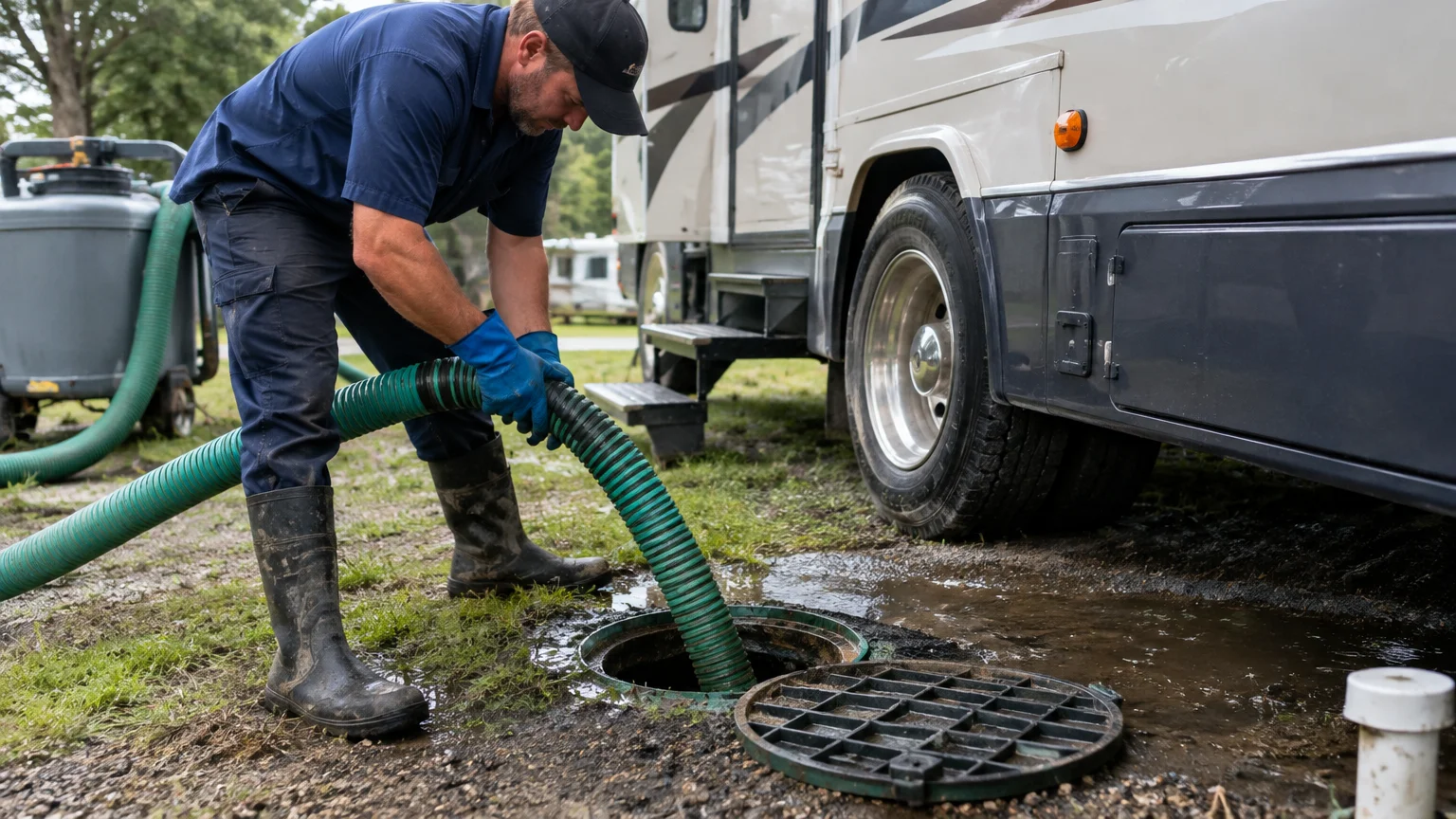
An RV holding tank stores wastewater until it can be dumped at an approved place. Water, toilet paper, and human waste collect inside. The contents leave through a valve and hose during dumping. The tank mainly stores waste and does not treat it like a home septic system.
A septic system is a private wastewater system. It holds wastewater in a buried tank and sends liquid to a drainfield. A drainfield is the soil area that receives liquid for more filtering. An RV tank stores waste, while a home septic tank settles and treats wastewater over time.
The role of bacteria, solids, and liquid waste
Bacteria already live in wastewater. Some bacteria help break down organic waste when conditions are right. They need moisture and a suitable setting. Strong cleaners, solvents, and some additives can upset that balance.
Solids may settle or stick to the tank surface. Liquid waste helps the contents move. Too little water can leave thick waste behind. A dry tank may smell more and empty less fully.
How an RV holding tank differs from a household septic tank
An RV tank is emptied often. A home septic tank holds wastewater longer and separates solids, scum, and liquid. Its drainfield depends on healthy soil and careful use. An RV product may create a different problem when it enters a home septic system.
When an RV connects to a home system, avoid harsh chemicals. The home tank already has its own natural process. Septic Tank Service Conyers serves Conyers and can explain when RV waste needs separate handling from household wastewater.
Do RV Septic Tank Treatments Break Down Waste Better?
Most RV septic tank treatment products cannot replace the basic steps that help a tank empty well. Waste breaks down best with enough water, proper use, and regular dumping. A treatment may change an odor or soften some material, but it may not remove all solids.
Results can vary by product, waste load, tank use, and tank condition. A product that seems useful for one RV may do little in another. Read product claims with care. No chemical can solve every tank problem.
What happens to waste inside the tank
Waste may settle, float, or stick to the tank surface. Toilet paper can collect near sensors, corners, and the bottom. Too little water may form a thick waste layer. Dumping only liquid from a partly filled tank can leave that layer behind.
A treatment cannot change the shape of the tank. It also cannot fix poor dumping habits. It cannot remove a blockage in the valve, hose, or outlet. Physical cleaning may be needed when waste hardens or sensors stay coated.
Why treatment performance can vary
RV use is different from trip to trip. A family using an RV for days creates a different waste load than someone taking a short trip. Tank size, water use, paper, heat, and storage time also matter.
Treat additives as optional, not essential. Follow the label if you use one, and never mix products. Mixed chemicals can create fumes or harm tank parts. Do not use a treatment to hide a tank that needs cleaning or inspection.
Can RV Septic Tank Treatment Prevent Odors?
RV septic tank treatment may cover an odor for a short time, but it cannot fix every cause. Bad smells may come from low water, a dry plumbing trap, poor venting, a loose seal, or waste left inside. Finding the cause is more useful than adding more scent.
The black-water valve should stay closed until the tank is ready to dump. Leaving it open may let liquid drain while solids stay behind. This can cause a thick waste layer and stronger odors. It can also make the tank harder to empty.
What causes unpleasant holding-tank smells
Common causes include a full tank, poor airflow, a blocked roof vent, a worn toilet seal, or waste left after dumping. A dry seal may let odors enter the RV. A vent problem can push smells through another opening.
Water helps keep waste soft and reduces contact with dry tank surfaces. After dumping, add water as directed by the RV maker. Check the seals and vents when odors continue.
When odors indicate a maintenance problem
A smell that remains after dumping deserves attention. It may point to a valve that does not close, a cracked hose, or a blocked vent. Odors near a home connection may mean wastewater is not moving as it should.
Strong fumes, sewage near the RV, or wastewater backing up are warning signs. Avoid skin contact and keep children and pets away. Safe cleanup matters more than adding another chemical.
Do RV Tank Treatments Help With Clogs or Tank Sensors?
RV tank treatments may loosen a little residue, but they cannot replace physical cleaning. A clog may sit in the toilet outlet, gate valve, sewer hose, or connection. A sensor may also show a false reading because waste covers its surface.
A gauge that always reads full needs more than a guessed dose of treatment. Check the tank level, valve, wiring, and sensor system. Follow the RV maker's instructions for flushing or cleaning.
Why sensors may give inaccurate readings
Some tank sensors touch the inside wall. Others measure contact through the tank. Waste, paper, grease, and mineral deposits can affect the reading. A sensor may show full after the tank is empty, or empty when a connection has failed.
Watch normal water use and dumping behavior as another check. This does not repair the gauge, but it can show whether the reading seems right. Do not keep adding chemicals just because the display looks wrong.
Why treatments cannot replace physical cleaning
A stuck valve or packed outlet needs direct attention. A product poured into the toilet may not reach the blockage. Harsh chemicals can also harm rubber seals, plastic parts, or the sewer hose.
If a tank will not drain, stop forcing the valve. Repeated pressure can cause a leak. A trained technician can inspect the system and choose a cleaning method that fits the RV and its parts.
Are RV Septic Tank Treatments Safe for Septic Systems?
Not every RV septic tank treatment is safe for a home septic system. Ingredients that kill bacteria, cut grease, dissolve material, or add strong scents may affect the tank's natural biology. The safest choice is to keep questionable chemicals out of the home system.
A septic tank depends on natural microbes to help process wastewater. This process takes time. It does not make every product safe. Drain cleaners, solvents, paint, fuel, and strong disinfectants can cause larger problems than normal wastewater.
Ingredients that may create concerns
Check the label for strong disinfectants, solvents, acids, alkalis, and compounds made to kill microbes. A product that kills bacteria may harm the biology a septic system needs. A scent does not prove that waste has been treated.
Never mix cleaners or use a product without clear directions. When an RV connects to a home, follow septic-safe practices across the property. Local rules may also control where RV waste can be dumped.
How chemicals can affect septic-system biology
A septic tank has a community of tiny organisms. They help break down some organic waste as it settles. A large dose of a harsh chemical can disturb that process. The effect depends on the substance, amount, and condition of the tank.
A damaged or overloaded septic system cannot be fixed by an RV additive. Slow drains, wet ground, sewage odors, and backups need an inspection. Adding more treatment may delay the right repair.
What Is the Verdict on RV Septic Tank Treatment?
The answer is simple: routine RV septic tank treatment is usually not needed. Good water use, correct dumping, safe toilet habits, and regular care do more than most additives. A product may offer limited help in one situation, but it should not replace maintenance.
Read the label before using any product. Make sure it is made for the exact tank and disposal method. A product for a portable toilet or marine system may not suit an RV tank or home septic system.
When a treatment may offer limited help
Some owners may choose a mild product for odor control while following the label. Even then, see it as an extra step. Do not use it to cover a leak, blocked vent, damaged seal, or tank that will not drain.
Stop using a product if it causes stronger smells, skin irritation, foam, or changed tank operation. Keep the container for a technician to review. Product information may help show what entered the system.
Why routine use is usually unnecessary
A holding tank can work without an additive when it gets enough water and is dumped correctly. Extra chemicals create another chance for misuse. They may affect RV parts, a dump station, or a home septic system.
A simple routine is easier to follow. Learn the tank size, watch water use, keep the valve closed until dumping, and clean the tank as the maker allows. These steps address the cause instead of hiding the symptom.
What Should You Use Instead of an RV Septic Tank Treatment?
Water, safe waste habits, and regular dumping are the best first choices. An RV tank needs enough liquid to keep waste moving. Follow the RV maker's directions and keep unsuitable items out of the tank.
The same rule applies when an RV connects to a home septic system. Only suitable wastewater should enter it. No product can make a harmful item safe after it is flushed. Proper disposal outside the plumbing is better.
Water, proper waste habits, and regular dumping
Use normal toilet paper in sensible amounts. Add water when the RV instructions call for it. Keep the black-water valve closed during normal use. Open it fully during dumping so the tank can empty with strong flow.
A practical checklist includes:
- Use enough water for each flush and follow the RV manual.
- Keep the black-water valve closed until the tank needs dumping.
- Dump through an approved connection or station.
- Rinse or flush the tank only with an approved method.
- Check seals, hoses, valves, and vents during routine care.
Products and materials that should never enter the tank
Grease, cooking oil, paper towels, wipes, diapers, hygiene products, cat litter, and chemicals should stay out. Even items marked flushable may not break down safely in an RV system. Paint, fuel, solvents, and pesticides also need proper disposal.
Keep cleaning products away from the toilet unless the RV maker approves them. A small amount of a suitable cleaner may be allowed, but more is not better. Strong products can harm seals and upset septic-system biology.
How Should You Maintain an RV Holding Tank?
An RV holding tank needs a steady routine, not constant chemical treatment. Owners can safely do many basic checks themselves. These include watching tank levels, checking for leaks, and looking over the sewer hose.
Stop DIY work when sewage exposure, a stuck valve, or a hidden blockage is likely. Maintenance should follow the RV maker's instructions. Different tanks and sensor systems may need different cleaning methods.
A practical maintenance routine
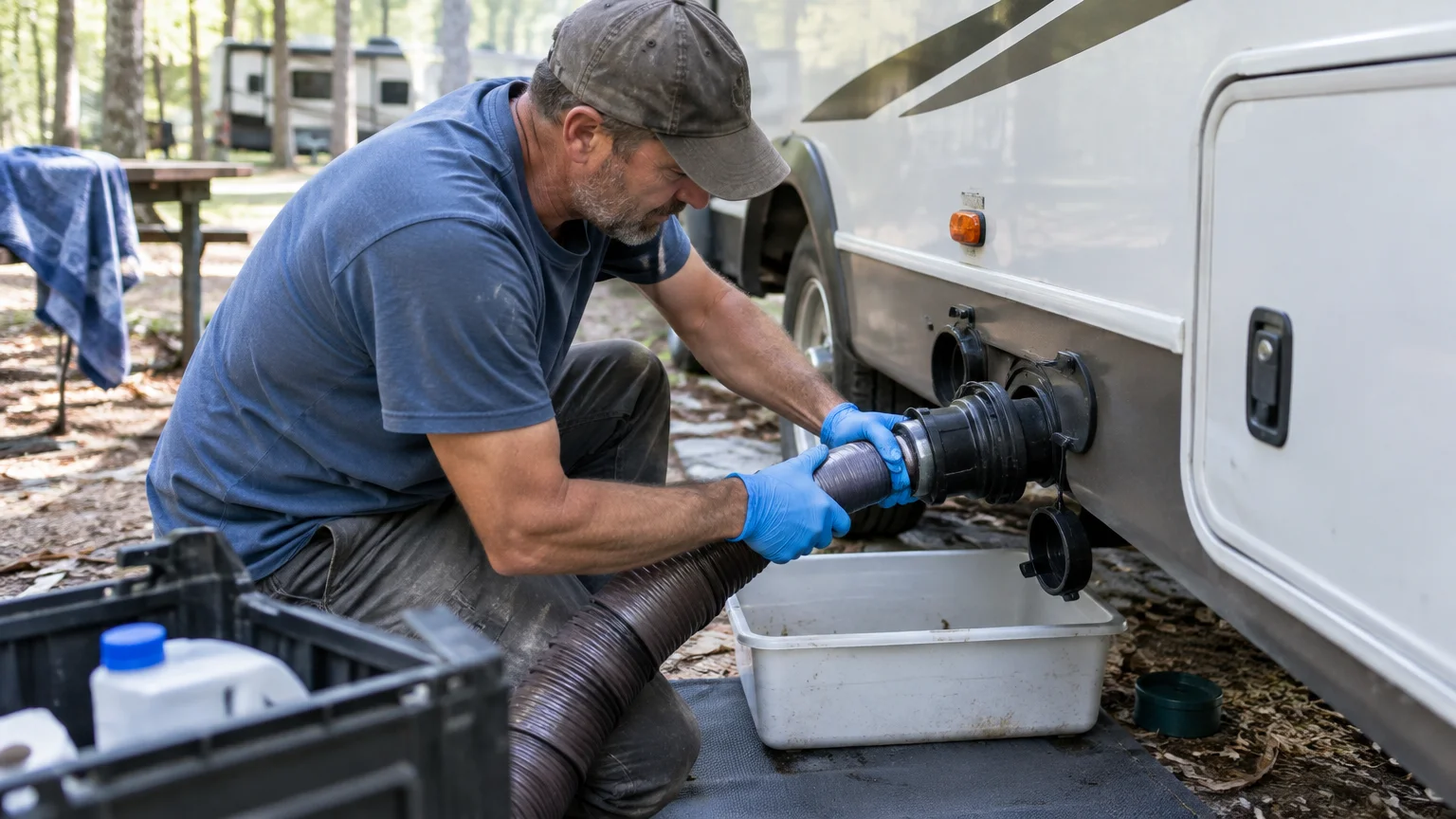
Start by checking the toilet seal, water level, vent, and hose connection. During a trip, watch for slow drainage, new smells, or a gauge that changes oddly. These signs may appear before a full blockage.
After dumping, close the valve and use the approved rinse method. Do not leave the tank full during long storage unless the maker says to do so. Store hoses so wastewater cannot touch clean water equipment.
Follow these steps:
- Confirm that the dump connection is secure.
- Open the correct valve fully during dumping.
- Watch until the flow stops.
- Rinse only with an approved method.
- Check for leaks before storing the hose.
- Record unusual smells, slow flow, or false readings.
Signs the tank needs professional attention
Professional help may be needed when the tank will not empty, the valve is stuck, or sewage appears outside the system. A repeated full reading may point to a sensor or buildup problem. Leaks near a home connection need prompt care.
Act when drains back up, wet spots appear near a septic area, or sewage odors remain after normal dumping. These signs may involve the RV, the home septic tank, or both. Septic pumping may be needed for a household system, while the RV may need cleaning or repair.
When Should You Contact a Septic Tank Professional?
A septic tank professional should inspect the system when pumping, a blockage, a leak, or a backup is suspected. The right service depends on where the problem starts. An RV tank may need cleaning or valve repair, while a home tank may need inspection and septic pumping.
Professionals can tell whether the issue is inside the RV or farther down the line. They can also help protect the property from spills and unsafe waste handling. This matters when an RV uses a home septic system or sits near a drainfield.
Problems that require inspection or pumping
Contact a qualified professional for sewage backups, slow drains across the property, standing wastewater, broken valves, or strong odors that remain. A tank that cannot be emptied should not be attacked with random chemicals or tools.
A professional may inspect the tank, outlet, inlet, baffles, lines, vents, and nearby soil. They can explain whether the problem needs septic pumping, cleaning, repair, or another service. Emergency pumping may be needed when sewage backs up or threatens the property.
How professional service protects the property and system
Proper pumping removes settled solids before they move toward the drainfield. Careful inspection can find cracks, damaged covers, blocked lines, and unsafe connections. Early action may help keep wastewater out of the yard, home, or nearby water.
Septic Tank Service Conyers helps property owners make informed septic choices throughout Conyers. The team can review concerns about RV waste, household tanks, septic tank replacement, and safe maintenance. Service needs may differ from one property to another, including concerns about 24/7 service during urgent problems.
Key Takeaways
- Most RV septic tank treatment products are optional, not essential.
- Water, proper dumping, and safe waste habits support better tank care.
- Odors and false sensor readings often point to a maintenance issue.
- Harsh chemicals may harm RV parts or upset septic-system biology.
- Backups, leaks, blocked valves, and sewage odors need professional attention.
Frequently Asked Questions
Is RV septic tank treatment necessary?
Usually, no. An RV holding tank can work well with enough water, correct dumping, and safe waste habits. Some owners use a mild product for odor control, but it should not replace maintenance. Check the label first, especially when the RV connects to a household septic system.
Can an RV treatment break down toilet paper?
It may soften some paper or residue, but results vary. Tank size, water use, paper type, and storage time affect the result. A treatment cannot remove a hard blockage or clean a heavily coated sensor. Proper water use and full dumping remain more dependable.
Why does an RV tank smell after it has been dumped?
A smell may come from waste left in the tank, low water, a dry toilet seal, or a blocked vent. A loose valve or hose may also let odors escape. Check these parts before adding more treatment. Continued sewage odors need an inspection.
Can RV chemicals damage a home septic system?
Some chemicals can disturb the natural biology in a household septic tank. Strong disinfectants, solvents, acids, and bacteria-killing products may create concern. Keep harmful materials out of both systems. Follow product directions and septic-safe waste practices.
When does an RV holding tank need professional help?
Professional help is right when the tank will not drain, a valve will not move, sewage leaks, or odors continue after normal care. A full reading that never changes may also need inspection. A technician can tell whether the problem involves the RV tank, connection, or home septic system.
Conclusion
RV septic tank treatment products may sound helpful, but they cannot replace water, proper dumping, or safe waste habits. Most owners can handle routine checks and simple upkeep themselves. When a tank backs up, leaks, smells strongly, or will not empty, professional inspection is safer for the RV and property.
If you are unsure what you are dealing with, have the system checked before the problem grows. Contact us today to discuss the next step with Septic Tank Service Conyers.