The answer to how often to clean out septic tank systems depends on tank size, household use, water flow, and solid waste. Many homes need regular septic pumping every few years, but no single schedule fits every property. A septic professional can check the tank and help set a safe plan for your home.
Table of Contents
- How Often Should You Clean Out a Septic Tank?
- Can Homeowners Handle Septic Tank Maintenance Themselves?
- How Do You Know When a Septic Tank Needs Pumping?
- What Are the Steps for Cleaning Out a Septic Tank?
- What Can Go Wrong If You Wait Too Long to Pump?
- How Can You Keep a Septic Tank Working Between Pump-Outs?
- When Should You Call a Septic Tank Professional?
- Frequently Asked Questions
How Often Should You Clean Out a Septic Tank?
Most septic tanks need regular checks and pumping when sludge and scum take up too much room. The right time depends on the number of people in the home, tank size, water use, and solid waste. A small tank serving a busy home may need service sooner than a large tank serving fewer people.
Sludge is the heavy waste that settles at the tank bottom. Scum is the floating layer of grease and other light waste. Pumping removes both layers before they enter the outlet pipe or drainfield. A drainfield is the soil area that receives treated wastewater and filters it.
What determines the right pumping frequency?
Past service records are a good place to start. If records are missing, a professional can inspect the tank and measure its layers. This helps create a schedule based on actual use instead of a guess. New property owners should ask for pumping and inspection records when buying a home.
Guests, frequent laundry, and a garbage disposal can send more waste into the system. Older tanks, high groundwater, and damaged baffles may also change the schedule. Soil, system design, and local permit records can matter as well. Septic Tank Service Conyers can help homeowners understand which factors affect their Conyers property.
How do household size and tank capacity affect timing?
More people usually means more showers, toilet use, laundry, and wastewater. A larger tank can hold more solids before pumping, but it still needs regular checks. Rental homes also need a clear plan because the number of tenants can change over time.
The best answer to “septic tank when to pump” comes from the tank’s actual condition. Calendar reminders are helpful, but they should not replace inspections. Homeowners can ask Septic Tank Service Conyers about a care plan for a home, rental, or business.
Can Homeowners Handle Septic Tank Maintenance Themselves?
Homeowners can handle simple care, such as spreading out laundry and fixing leaks. They can also keep records and watch for wet spots, odors, or slow drains. They should never open, enter, pump, or repair a septic tank themselves. Septic tanks can hold toxic gases and unsafe wastewater.
Routine care starts inside the home. Fixing leaks quickly keeps extra water out of the system. Careful use of toilets, sinks, and appliances also helps. These steps do not replace pumping, but they can reduce strain between professional visits.
Which routine tasks are safe for homeowners?
A homeowner can safely handle these basic tasks:
- Keep records of inspections and past pump-outs.
- Repair leaking toilets, faucets, and outdoor spigots.
- Spread laundry across several days instead of doing it all at once.
- Keep cars, sheds, and heavy equipment off the drainfield.
- Learn where the tank, lids, pipes, and drainfield are located.
- Watch for standing water, odors, or unusually green grass.
Homeowners should also learn if their system has an effluent filter. This filter helps keep solids from leaving the tank. It may need professional cleaning, and its care depends on the system design.
When is septic maintenance not a do-it-yourself job?
Septic pumping needs a vacuum truck, safe waste handling, and trained workers. Tank lids may be heavy, buried, or damaged. Entering a tank can be deadly because gases can remove oxygen or cause sudden illness. No one should climb into a tank, lean over an open access point, or work alone nearby.
A homeowner should not dig near buried lines without knowing their location. A professional can help prevent damage to pipes, the tank, and nearby utilities. This matters before landscaping, building, or putting up a fence.
How Do You Know When a Septic Tank Needs Pumping?
Common warning signs include slow drains, sewage odors, gurgling plumbing, wastewater near the tank, and wet ground over the drainfield. These signs may point to a full tank, blocked pipe, failed pump, or drainfield trouble. Do not ignore them just because the toilets still flush.
A full tank may not show clear signs at first. Waiting for a backup is not a good care plan. Early service may find the cause before wastewater reaches floors, yards, or nearby water.
What are common warning signs of a full or overloaded tank?
Watch for changes that affect more than one fixture. One slow sink may have a local clog. Several slow drains may point to a septic issue. Strong sewage smells outside may signal a leak, poor airflow, or trouble near the tank or drainfield.
Important signs include:
- Toilets flush slowly or make odd bubbling sounds.
- Several drains become slow at the same time.
- Sewage odors appear inside or outside the home.
- Grass over the drainfield looks very bright or grows faster.
- The yard has wet soil or wastewater near the system.
- Sewage backs up into a shower, floor drain, or toilet.
Why can waiting for symptoms create bigger problems?
A backup is often a late warning. Solids may have already moved into the outlet line or drainfield. Once soil pores clog, wastewater may not spread or filter well. The property may then need more than routine pumping.
Keep people and pets away from suspected wastewater. Do not dig in the area or cover it until the cause is known. Septic Tank Service Conyers serves property owners in the main Conyers area, from Downtown Conyers to Lithonia, Stockbridge, Milstead, Almon, and nearby communities.
What Are the Steps for Cleaning Out a Septic Tank?
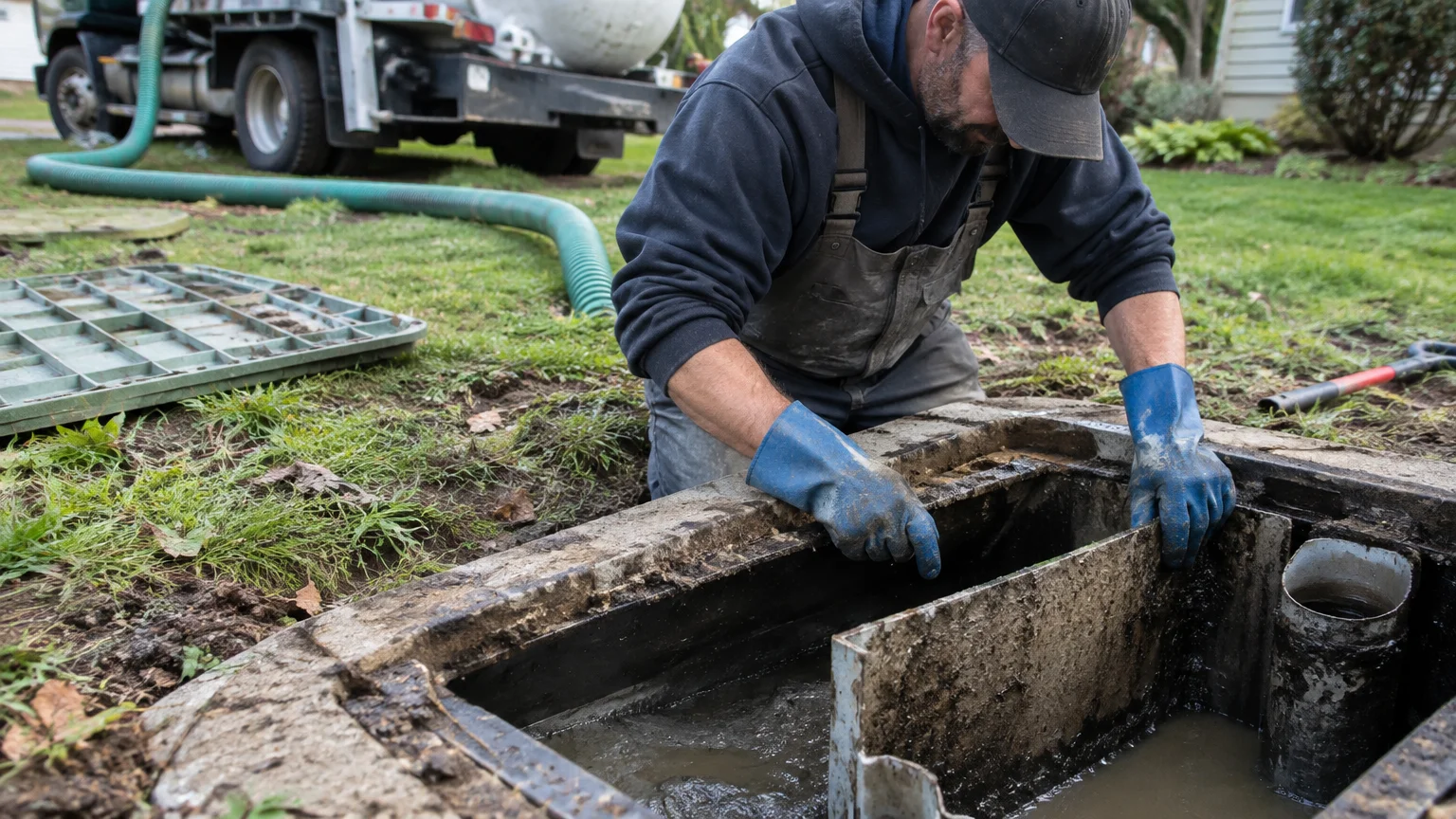
A professional pump-out starts with safe planning and access. The worker finds the tank, opens the access point, and removes liquid, sludge, and scum with a vacuum truck. The worker may also check baffles, filters, lids, and inlet and outlet pipes.
The exact steps depend on the tank and the site. Some tanks have one access lid, while others have separate lids. A buried tank may need careful digging before work can begin.
How should a homeowner prepare for a professional pump-out?
Find any available records and mark the likely tank location. Clear the work area of cars, toys, furniture, and loose items. If you do not know where the tank is, share property plans or old service notes.
Tell the worker about slow drains, odors, backups, unusual water use, or nearby construction. Also mention any pump tank, alarm, filter, or backup drainfield area. These details can help the worker check the system more safely.
What happens during septic tank pumping?
The worker safely reaches the tank and removes its contents. The tank is checked for cracks, damaged lids, roots, broken baffles, and leaks. If the tank has an effluent filter, the worker may clean and inspect it during the visit.
Pumping does not fix every septic problem. A blocked line, failed pump, broken pipe, or full drainfield may need other work. The worker should explain visible concerns and suggest an inspection if the tank does not explain the symptoms.
What Can Go Wrong If You Wait Too Long to Pump?
As solids build up, they reduce the tank’s usable space. Wastewater may then leave before solids settle. Those solids can block pipes or reach the drainfield, where they can limit soil absorption.
A neglected system can cause sewage backups, bad odors, wet ground, and damage to landscaping. It can also create health risks for people and pets. The final cost of needed work is confirmed on a quote and depends on access, system size, damage, parts, and urgency.
How do sludge and scum affect the septic system?
A working tank separates solids from liquid. Heavy sludge sinks, while scum floats. The middle layer should move through the outlet without carrying large amounts of solid waste. Too much sludge or scum reduces this separation space.
A damaged baffle can make the issue worse. A baffle slows the flow and helps keep floating or settled waste inside the tank. If it breaks, solids may reach the drainfield sooner than they should.
What damage can reach the drainfield and property?
The drainfield needs open soil spaces to accept wastewater. Extra solids, too much water, or poor soil can slow this flow. The result may be standing water, sewage on the surface, or wastewater moving back toward the home.
A failing drainfield may need testing and design work, not just pumping. A perc test, or percolation test, measures how quickly water moves through soil. A qualified soil worker or local authority may perform it, based on local rules. A septic inspection can also help before buying a home or changing the property.
How Can You Keep a Septic Tank Working Between Pump-Outs?
Good daily habits can reduce strain on the tank and drainfield. The main goals are to limit extra water, keep harmful items out, and protect the soil area. These steps help, but they do not remove the need for inspections or pumping.
Everyone in the home should follow the same rules. One large release of water can affect a small system. Tenants, guests, and new owners should know where the tank and drainfield are and what materials must stay out.
Which water-use habits reduce strain on the system?
Fix leaks as soon as you find them. Run full dishwasher and washing machine loads, but spread laundry across the week. Avoid sending large amounts of water into the system at one time. Direct roof drains and surface water away from the tank and drainfield.
Protect the drainfield from heavy weight. Do not park cars or place storage buildings over it. Deep tree roots may damage buried pipes, so choose plants based on local advice and the system layout.
Which products and materials should stay out of the tank?
Toilets should receive human waste and toilet paper only. Grease, wipes, paper towels, paint, chemicals, and medicines can harm pipes or upset treatment. A garbage disposal can add solids and may lead to more frequent care.
Do not depend on septic additives as a replacement for pumping. Products that claim to clean or restore a system cannot fix a blocked pipe, damaged tank, or failed drainfield. Ask a qualified professional before adding any product.
When Should You Call a Septic Tank Professional?
Call promptly when sewage backs up, wastewater appears in the yard, strong odors continue, or several drains slow at once. A professional should also check the system before buying a property, adding bedrooms, building near the drainfield, or making a major change to water use.
Urgent help may be needed when sewage enters the home or reaches play areas. Keep away from wastewater, stop extra water use, and explain the symptoms when arranging service. Do not cover the problem with soil or cleaners.
Which situations require prompt septic service?
Call a septic professional when:
- Wastewater backs up into a sink, tub, shower, or toilet.
- A sewage smell continues after normal plumbing checks.
- The yard stays wet near the tank or drainfield.
- Several fixtures drain slowly or make gurgling sounds.
- A septic alarm sounds or a pump stops working.
- A tank lid, pipe, or access cover appears damaged.
Septic Tank Service Conyers can help property owners review symptoms and decide whether pumping, inspection, or another service may help. Local conditions and system designs differ, so a site visit may be the safest next step.
What information should a homeowner gather?
Share the property address, system location, last service date, recent symptoms, and the number of people using the system. Note unusual water use, construction, heavy rain, plumbing repairs, or recent backups. Photos of wet ground or damaged lids may help, but do not approach unsafe wastewater.
For a home sale, gather permits, inspection reports, pumping records, and repair papers. These records help the professional understand the system and help the owner plan future care. They may also help identify whether septic tank replacement could become necessary later.
Frequently Asked Questions
How deep should a septic tank be?
Septic tanks sit at different depths based on tank design, soil, slope, frost, and local rules. Many have access lids near the surface, but some are deeper. Do not dig without knowing where the tank is. A professional can locate the tank and identify its access points safely.
What is a septic system?
A septic system treats household wastewater on the property. It usually has a tank, inlet and outlet pipes, and a drainfield. Solids settle in the tank while liquid moves toward the drainfield for soil treatment. The system needs proper use, inspections, and pumping to work well.
How far does a septic tank need to be from a house?
The required distance depends on local health rules, lot size, soil, wells, and system design. Setback rules can differ by state and county. Check local records or ask a qualified professional before installing, moving, or expanding a system.
Who performs a perc test?
A qualified soil worker, health official, engineer, or approved specialist may perform a perc test. The exact rule depends on the area. The test checks how water moves through soil. It is often used for a new or replacement drainfield, not as a routine substitute for pumping.
How often should a septic tank be inspected?
Inspection timing depends on system age, use, service history, and local rules. An inspection is wise before buying a property, after warning signs, or when records are missing. Regular checks help confirm that the tank, pipes, pump, and drainfield work as expected.
Key Takeaways
- Pumping time depends on tank size, household use, water flow, and solid waste.
- Homeowners can handle safe upkeep but should never enter or pump a tank.
- Slow drains, odors, wet soil, and backups can signal a septic problem.
- Service records and inspections can help prevent sudden system failures.
- Keep grease, wipes, chemicals, and extra water out of the septic system.
Conclusion
Knowing how often to clean out septic tank systems can help property owners avoid backups and drainfield damage. The best schedule comes from tank conditions, household use, and service records. Water-saving habits help between visits, but professional pumping and inspection remain important.
Septic Tank Service Conyers helps homeowners, tenants, investors, and business owners with septic care. The right service can help you understand warning signs and plan the next safe step.
Contact us today to arrange septic tank service.